Skip to content
Home Curriculum Study Path Principles Household sketches About Enrol on the course

Household sketches

Three invented households, used in class so the rules have somewhere to stand.

These are not clients, reviews, or results. Names, towns and sums are made up for teaching. If your facts rhyme with a sketch, that is a reason to prepare questions, not a reason to copy the ending.

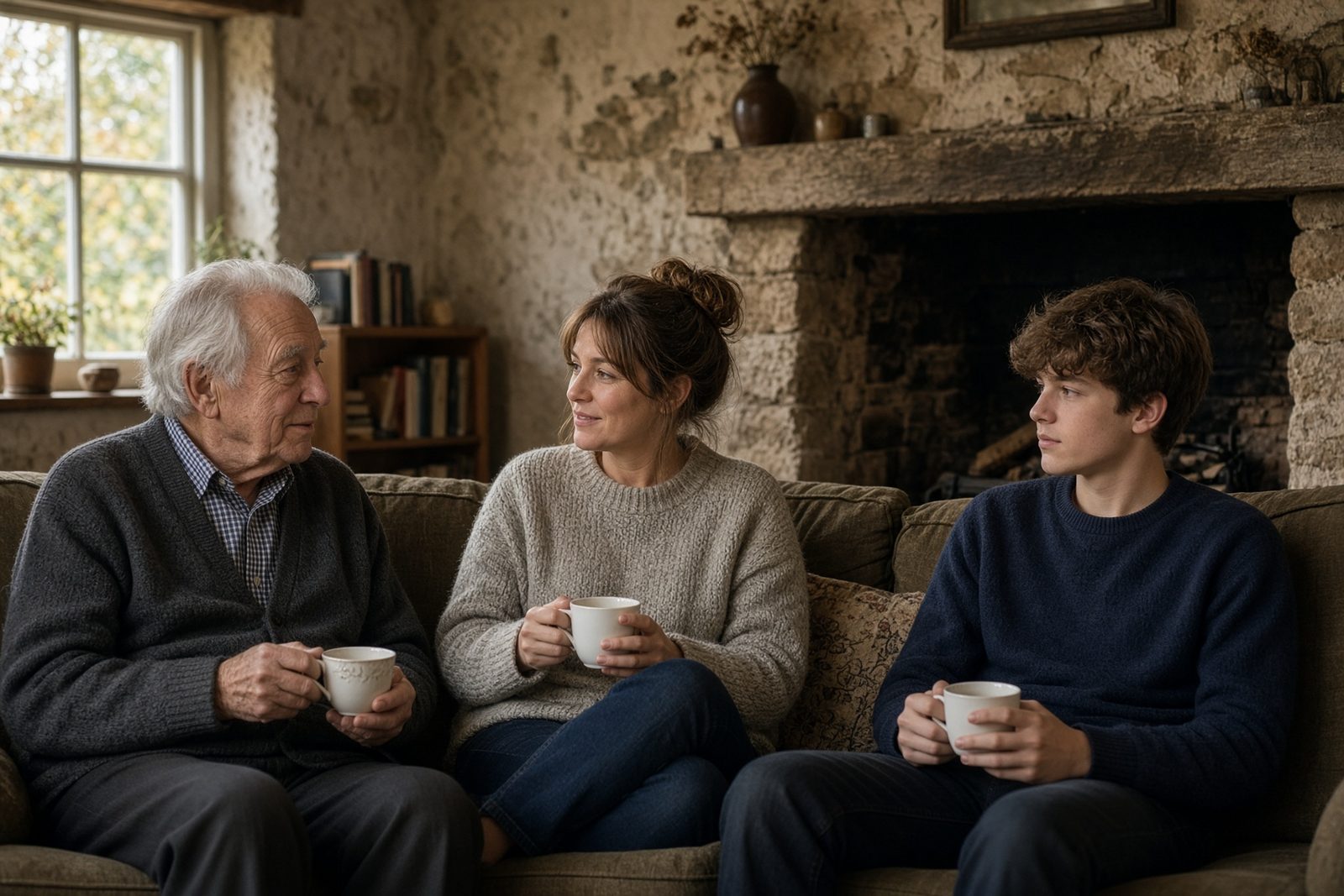
Three generations talking together on a sofa beside a stone fireplace

Sketch one

Priya and Tom

Leeds. Not married. One child. A house they believe is “both of ours”.

Priya and Tom have lived together for eleven years. The house is in both names. They have never looked at whether they are joint tenants or tenants in common. Tom assumes that if he died, Priya would inherit everything “because of the house and the child”. The intestacy lesson puts that sentence on the table and takes it apart.

Under the intestacy rules of England and Wales, Priya is not a spouse and not a civil partner. She does not take the statutory legacy. Their child can inherit Tom’s estate. Whether Priya keeps the house depends on the title, not on the length of the relationship. If they are joint tenants, Tom’s share passes to Priya by survivorship and never enters intestacy. If they are tenants in common, his share can fall into the estate and the child may have a claim on it. The course does not tell them which they are. It tells them to read the title register before they book a solicitor, and to stop using the word “ours” as if it were a legal term.

The sketch ends with a question list, not a will. Who is the guardian if both parents die. Whether Tom’s pension nomination names Priya or his mother from a form he filled in at twenty-six. What should happen to the car that is in Tom’s sole name. None of those are answered inside the sketch, because the point of the exercise is the list.

Sketch two

Helen

Near Hexham. Widowed. Two adult children who are good at different things.

Helen wants her son to be able to pay the gas bill and speak to the bank if she is in hospital. She wants her daughter, who is a nurse, to be able to speak to doctors about treatment. She has been told by a friend to “get power of attorney” as if it were a single document.

Module 5 splits the request. A property and financial affairs LPA can name the son. A health and welfare LPA can name the daughter. She can name them as replacements for each other. She must have capacity when she makes them. A certificate provider, who is not family, has to be involved. Each LPA is registered separately with the Office of the Public Guardian, and the fee used in class is £92 each, so the pair is £184 before any reduction she may qualify for. Until registration finishes, neither child can rely on the document. The health and welfare LPA does not let her daughter overrule her while she can still decide.

The sketch also asks Helen who would be hurt by being left out, and whether she has told both children the split is about their skills and not about favour. That conversation is module 10. The course does not complete the LPA forms for her.

Sketch three

The Okonkwo siblings

Manchester. Their father has died. The will names an executor who lives in Lagos and has not replied.

There is a valid will. The estate is a house in Manchester, a savings account, and a small pension. The named executor has not answered email for six weeks. The siblings want to know whether they can “just sort the house”. Module 9 is where this sketch is used.

The lesson distinguishes securing the property, which the family can do carefully and at once, from selling it, which they generally cannot do before a grant. It explains that an executor who will not act can renounce, and that there is a process where a court can remove or pass over an executor. Those are not forms the course supplies. The siblings are pointed toward a probate solicitor, with a folder already organised: the will, the death certificate, a list of assets, and a note of the attempts to reach the executor.

The sketch is deliberately unfinished. We do not invent a grant, a tax bill, or a reconciled family. The teaching point is the order of the first months, and the moment when self-help should stop.

Use the sketches as rehearsal, not as a mirror

If you recognised the shape of your own household, the useful next step is the asset map in module 1 and a conversation with a solicitor who can look at your title and your papers. The sketches are here so the rules are not abstract. They are not evidence that a particular outcome followed.

Ask about a place on the course